


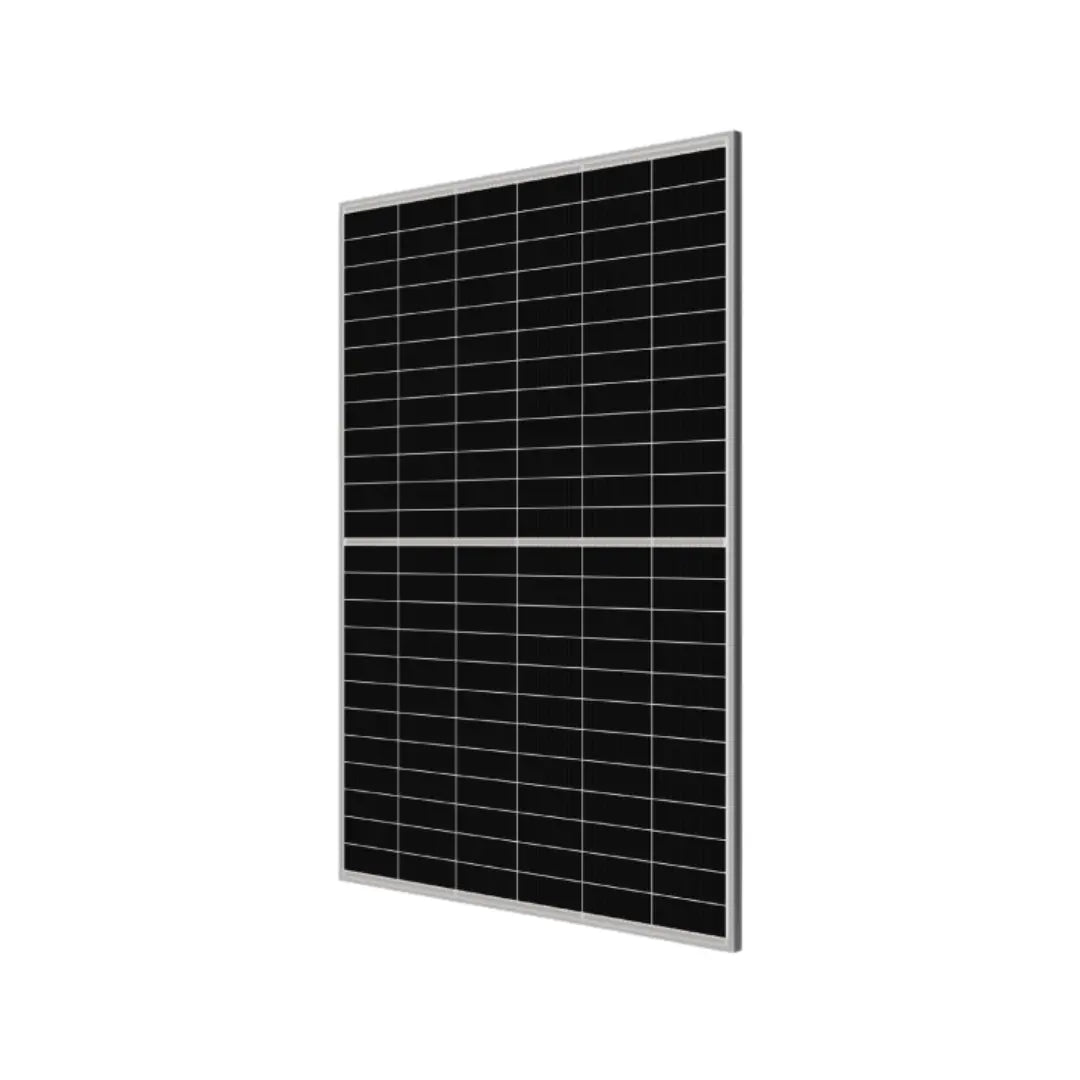

Canadian Solar TOPHiKu6 All-Black N-Type TOPCon Series
The TOPHiKu6 series represents Canadian Solar’s most advanced N-Type TOPCon offering, delivering superior energy density and "Zero-LID" performance for residential and commercial rooftops.
Notice: Canadian Solar CS6.2-48TM-445 is Out of Stock
The 445W model is currently unavailable. To ensure your project remains on schedule, we recommend the following high-efficiency alternatives:
-
Direct Series Replacement: [Canadian Solar CS6.2-48TM-440H (440W 96-Cell)] - This is the exact same physical series and 96-cell architecture as the 445W, providing a seamless swap for existing designs.
-
Next-Gen Efficiency Upgrade: [Canadian Solar CS6.1-54TM-450 (450W 108-Half-Cell)] - Our highest-output residential TOPHiKu6 module, featuring a 108-half-cell layout for improved shade tolerance.
-
Product Performance
Rated Power
Rated Power Per Cell
Efficiency
Power Tolerance
Temperature Coefficient
Resiliency
445W
3.9W
22.5%%
- 5 W ~ + 10 W
PMax: -0.29 | Voc: -0.25
✔️ Snow
✔️ Wind
✔️ Hail
Power (measured in watts) and efficiency (how well panels convert sunlight to electricity) are some of the most common metrics used to compare solar panel products. While they are not the only means of comparison, they are important determinants in how much electricity you can produce with a solar panel system. Metrics like power tolerance and temperature coefficient are also important ways to analyze the potential performance of solar panels under the different conditions they will experience over their lifetime. Learn how panels from different manufacturers stack up against one another in our updated article about the best solar panels on the market.
-
Warranty Information
✔️ Output Warranty Term: 30 years
✔️ Output Decline: 0.4%
✔️ Output at End of Warranty Term: 87.4%
✔️ Materials Warranty Term: 25 years
Solar panels generally come with an output warranty covering the energy production of the panel, and a materials warranty protecting you against undue wear and tear on your equipment. Learn more about solar panel warranties. -
Physical Characteristics
✔️ Cell Type: Monocrystalline
✔️ Panel Dimensions: 1762 mm x 1134 mm x 30 mm
✔️ Connector Type: Tlian: T6 Stäubli: PV-KST4-EVO2A/6I, PV-KBT4- EVO2A/6I
✔️ Cell Count: 108
The physical characteristics of a solar panel have an impact on the product's performance. For example, metrics like efficiency and wattage are based on the type, size, and number of solar cells used in a panel. -
Certifications
✔️ Certifications Received: IEC 61215, IEC 61730, IEC 61701, IEC 62716
Organizations like the International Electrotechnical Commission (IEC) and Underwriters Laboratories (UL) create national and international standards for photovoltaic solar panels to ensure any products on the market meet certain specifications for safety and reliability reasons.
Download Spec Sheet
Monocrystalline solar cell technology for enhanced efficiency. Produces 445W per square feet to optimize rooftops with space constraints. Independently generates renewable energy for electric bill savings.